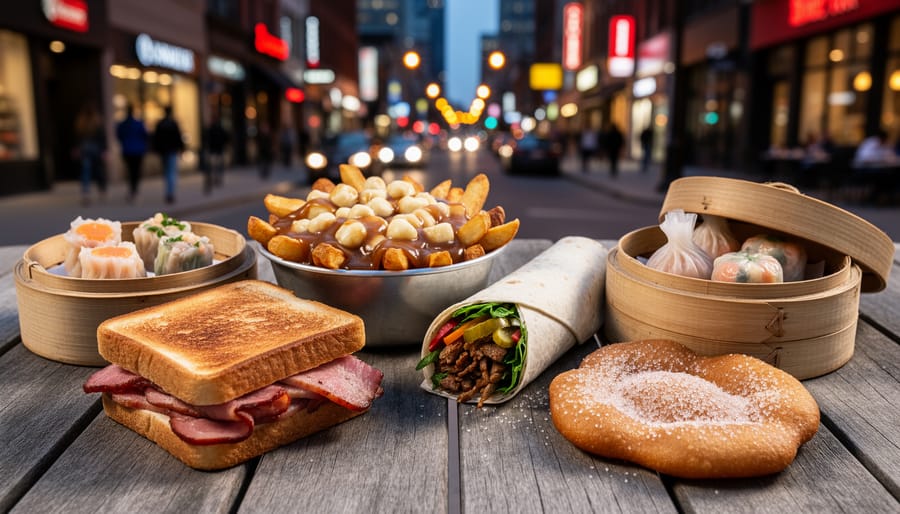
Toronto is known for peameal bacon sandwiches, poutine (especially with creative toppings), diverse dim sum, shawarma, jerk chicken, butter chicken, BeaverTails, bagels with distinctive Montreal-style rivals, and an explosive array of authentic ethnic food from over 200 nationalities. This city doesn’t just have signature dishes. It has signature neighbourhoods where every block tells a different culinary story, from the golden rotis of Little India to the hand-pulled noodles of Chinatown.
What makes Toronto’s food scene stand out isn’t a single iconic dish you can trace back centuries. It’s the collision of cultures on every corner, the fact that you can grab world-class Italian one night and Sri Lankan hoppers the next without leaving your postal code. The city’s food identity was built by waves of immigration, each group bringing their recipes, techniques, and fierce debates about the right quinoa cooking ratio or the perfect spice blend.
In this guide, we’re diving into 12 dishes that define eating in Toronto right now. Some are homegrown classics born in this city. Others are immigrant staples that have become so woven into Toronto life that locals claim them as their own. We’ve chosen spots where locals actually eat, not just tourist traps with inflated prices and mediocre food. Whether you’re visiting or you’ve lived here your whole life and somehow missed a few, this is your roadmap to understanding what Toronto tastes like.
How We Chose Toronto’s Most Famous Dishes
Choosing Toronto’s most famous dishes isn’t about picking personal favorites or chasing the latest trend. We focused on foods that truly define the city’s culinary identity, both for locals who’ve grown up with them and visitors experiencing Toronto for the first time. These aren’t just popular items, they’re dishes with stories, staying power, and deep community roots.
Our selection criteria included:
- Cultural significance and ties to Toronto’s diverse neighborhoods
- Availability at multiple iconic venues, not just one shop
- Historical roots or longstanding presence in the city’s food scene
- Recognition among visitors as distinctly Toronto or Canadian
- Local pride, dishes that residents actively recommend and defend
We looked for foods you can actually find and enjoy across the city, whether at century-old market stalls, beloved family-run spots, or neighborhood institutions that have earned their reputation over decades. Each dish on this list represents a slice of Toronto’s identity, shaped by the communities that brought them here or made them their own.
1. Peameal Bacon Sandwich, Toronto’s Breakfast Icon
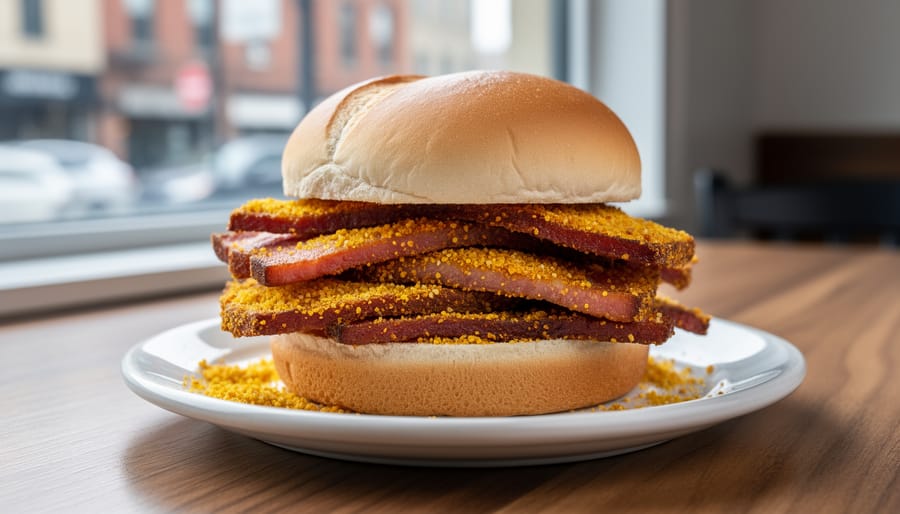
The peameal bacon sandwich isn’t just a breakfast, it’s Toronto’s edible handshake. Walk into St. Lawrence Market on a Saturday morning, and you’ll find locals and tourists lined up at Carousel Bakery for what many call the city’s most famous sandwich. This isn’t your typical bacon. Peameal bacon is wet-cured pork loin rolled in cornmeal (originally ground yellow peas, hence the name), sliced thick, griddled until the edges caramelize, and piled onto a soft kaiser roll. No cheese, no condiments, maybe a smear of mustard if you insist, because the meat itself is the star.
What makes it uniquely Toronto? The sandwich was born here in the 1800s when local butcher William Davies developed the curing method to preserve pork for export to Britain. The cornmeal coating kept it fresh during the journey. Fast-forward to today, and it’s become the breakfast that defines the city. The texture hits differently than American-style bacon: lean, tender, slightly sweet from the cure, with a subtle crunch from the cornmeal crust.
Carousel Bakery remains the gold standard, but you’ll find solid versions at Paddington’s Pump, The Stockyards, and even some diners citywide. Order it on a weekend morning, grab a coffee, and you’ve nailed Toronto breakfast culture in one bite.
2. Butter Tart, Ontario’s Sweet Pride
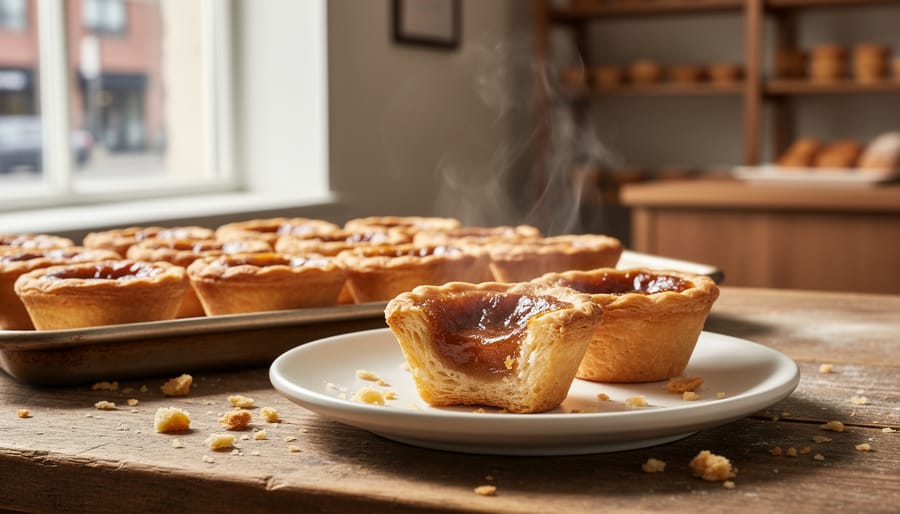
The butter tart stands as Ontario’s sweetest contribution to Canadian dessert culture, and Toronto has fully embraced this humble pastry as one of its iconic treats. Born from pioneer-era baking traditions, the butter tart combines a flaky pastry shell with a rich, gooey filling made from butter, sugar, and eggs, a simple recipe that sparks passionate debate across the city.
Toronto’s butter tart enthusiasts divide into fierce camps: raisin versus no-raisin, and runny versus firm. Purists insist on the classic version with plump raisins suspended in liquid gold filling that oozes when you bite in. Others swear by plain butter tarts or modern variations packed with pecans, walnuts, or even maple bacon. The texture debate runs equally deep, some prefer a filling so runny it requires a napkin strategy, while others champion a firmer, almost caramel-like consistency that holds its shape.
You’ll find exceptional butter tarts at St. Lawrence Market vendors, neighborhood bakeries throughout the city, and dedicated pastry shops that guard their recipes like family secrets. The Leslieville farmers’ market and Kensington Market bakeries showcase artisan versions, while long-established shops prove that perfecting this Ontario classic takes years of practice. Whether you pick a side in the great debates or sample them all, butter tarts represent Toronto’s dedication to honoring regional food traditions with serious craft.
3. BeaverTails, The Fried Dough Favourite
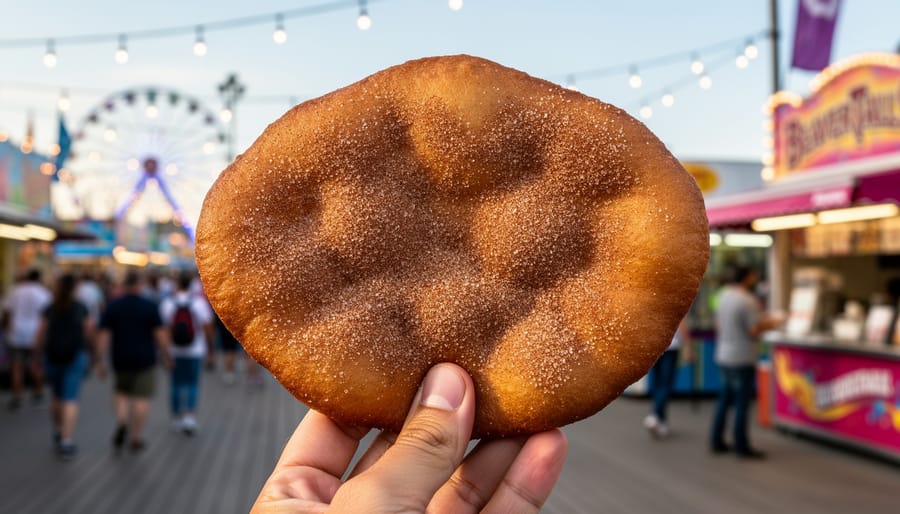
BeaverTails are one of those treats that look exactly like their name suggests: long, flat pieces of fried dough stretched to resemble a beaver’s tail. Born in Ottawa in 1978, this Canadian staple has become a fixture in Toronto, especially at outdoor festivals, skating rinks, and the Harbourfront. The dough is fried until golden and crispy on the outside, pillowy soft inside, then topped with sweet or savory options. The classic cinnamon sugar version remains the crowd favorite, but you’ll also find Nutella, maple butter, apple cinnamon, and even savory choices like garlic butter with cheese. During winter, grabbing a hot BeaverTail while skating at Nathan Phillips Square or strolling along the waterfront is a Toronto ritual. You’ll spot BeaverTails trucks and stands at nearly every major city event, from Winterlicious to the CNE. The permanent location at Harbourfront Centre means you can satisfy a craving year-round, no festival required. What makes BeaverTails so beloved isn’t just the taste, it’s the nostalgia and the communal experience of eating warm, messy fried dough outside with friends, a quintessentially Canadian moment that Toronto has fully embraced.
4. Patties, Caribbean Comfort in Every Bite
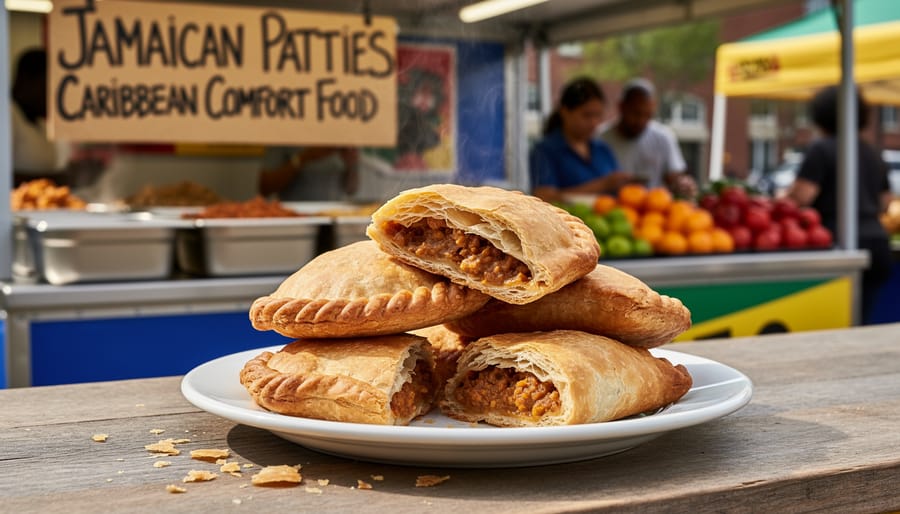
Walk into any Toronto corner store, subway station, or Caribbean bakery and you’ll find them stacked in warming displays: golden, flaky patties that have become as synonymous with this city as the CN Tower. Jamaican beef patties arrived with waves of Caribbean immigration in the 1960s and 70s, and they’ve been a Toronto staple ever since, affordable, portable, and deeply satisfying.
The patty’s signature lies in its bright yellow crust, tinted with turmeric and often enriched with suet or shortening for maximum flake. Inside, spiced ground beef mingles with Scotch bonnet heat, thyme, and curry powder, though chicken, veggie, and ackee versions are just as beloved. The best patties strike a balance: crust that shatters at first bite, filling that’s moist but never greasy, and enough spice to make you reach for a coco bread wrapper or a carton of juice.
Scarborough is ground zero for authentic patties. Patty King, Real Jerk, and Randy’s Patties have earned devoted followings, each with their own seasoning signatures and heat levels. In Kensington Market, Patty Palace keeps late-night crowds happy, while downtown chains like Jamaican Canadian Association locations ensure you’re never far from a fix. Order yours “coco bread style”, the patty sandwiched in a soft, slightly sweet bun, for the full Toronto experience.
5. Poutine, Montreal’s Gift, Toronto’s Obsession
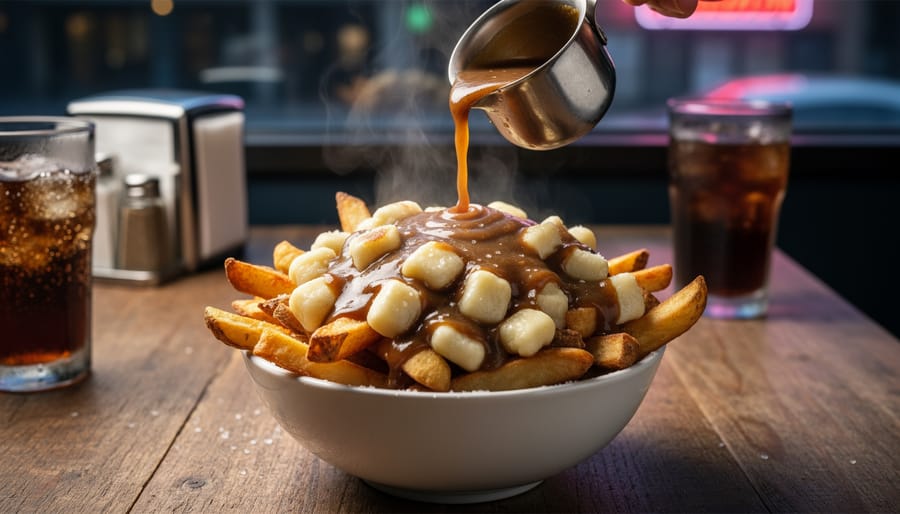
Poutine might hail from Quebec, but Toronto has claimed it as its own. The dish, fries smothered in gravy and cheese curds, arrived in the city decades ago and quickly became a late-night essential, comfort food staple, and canvas for culinary creativity.
Toronto’s poutine scene goes far beyond the classic. Sure, you can find traditional versions done right, with squeaky curds and rich brown gravy. But the city’s chefs have turned poutine into a platform for fusion experiments that reflect Toronto’s multicultural identity. Butter chicken poutine layers tikka masala sauce and paneer over fries. Pulled pork poutine adds smoky meat and tangy barbecue drizzle. Korean-inspired versions bring kimchi and gochujang into the mix.
Smoke’s Poutinerie, a Toronto-born chain, helped popularize loaded poutines across the city and beyond. Poutini’s House of Poutine in the Annex serves classic and creative builds in a no-frills setting. Newer spots experiment with duck confit, short rib, and truffle oil, pushing the dish upscale without losing its casual soul.
Why did poutine take off here? Toronto loves comfort food that travels well, satisfies post-bar cravings, and adapts to different tastes. Poutine checks every box. It’s become so embedded in the city’s food culture that many Torontonians forget it wasn’t born here, it just feels like it was.
6. Toronto-Style Hot Dogs, Street Cart Classics
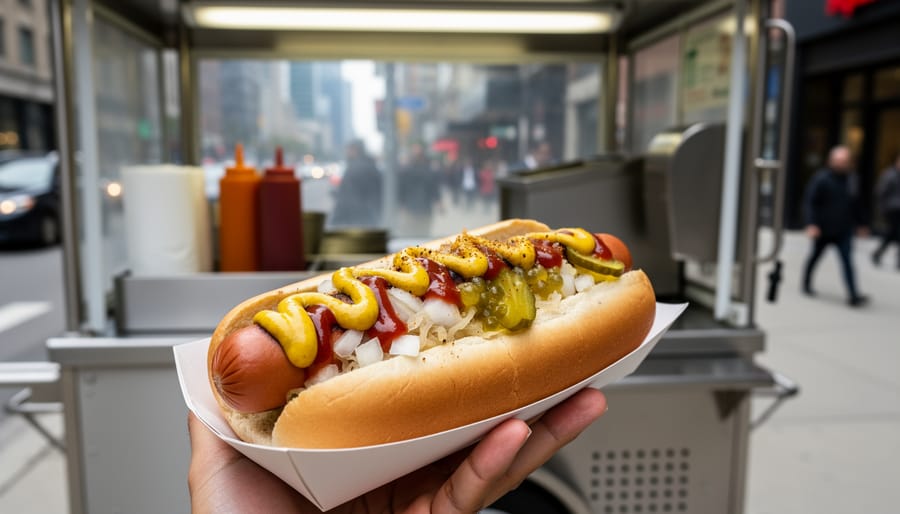
Nothing says Toronto after dark quite like a street-meat hot dog from one of the city’s iconic carts. These aren’t your average ballpark franks. A proper Toronto-style hot dog comes all-dressed: a beef or pork wiener nestled in a soft bun and loaded with sautéed onions, tangy yellow mustard, bright green relish, and a squiggle of ketchup. The onions, grilled right on the cart’s flat-top until they’re golden and caramelized, are what elevate the whole experience.
Toronto’s street cart culture thrives on busy corners, outside bars, concert venues, and transit hubs. These carts have fed late-night revelers, commuters, and hungry pedestrians for decades, becoming a low-key symbol of the city’s street food scene. You’ll find them on Yonge Street, near the Entertainment District, along Queen West, and scattered across downtown. The smell of grilling onions and the sizzle of hot dogs on the griddle are unmistakable.
Part of the charm is the ritual: ordering through the small window, watching the vendor assemble your dog with practiced speed, and eating it on the sidewalk while the city hums around you. It’s cheap, satisfying, and unmistakably Toronto. For the best experience, seek out carts with long lines after midnight, locals know which vendors nail the onion-to-condiment ratio every time.
7. Shawarma, Middle Eastern Staple
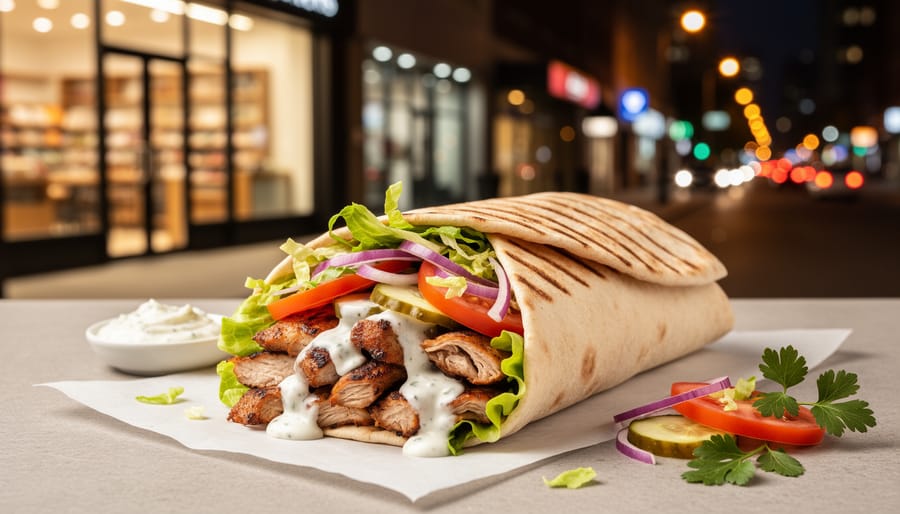
Shawarma has become as much a part of Toronto’s street food culture as hot dogs and patties. Walk down Yonge Street after midnight or cruise through Scarborough any evening, and you’ll find shawarma shops glowing with neon signs and the smoky aroma of spit-roasted chicken and beef. What sets Toronto shawarma apart is the sheer generosity, thick swirls of garlic sauce (toum), mountains of pickled turnip, crisp lettuce, and juicy tomatoes all stuffed into pillowy fresh pita. The portions are unapologetically hefty, and the late-night hours (many spots stay open past 2 a.m.) have made shawarma the city’s unofficial post-bar meal.
Toronto’s large Middle Eastern communities have brought authentic recipes and fierce competition, which means quality stays high and prices stay reasonable. Neighborhoods like Thorncliffe Park and Lawrence East are packed with family-run shops where the bread comes warm from the oven and the spice blends are house-made. Even some of the best organic stores now stock tahini and pickles inspired by shawarma’s popularity. Whether you order chicken, beef, or falafel, Toronto shawarma delivers bold flavors, comfort, and value every time.
8. Dim Sum, A Sunday Tradition
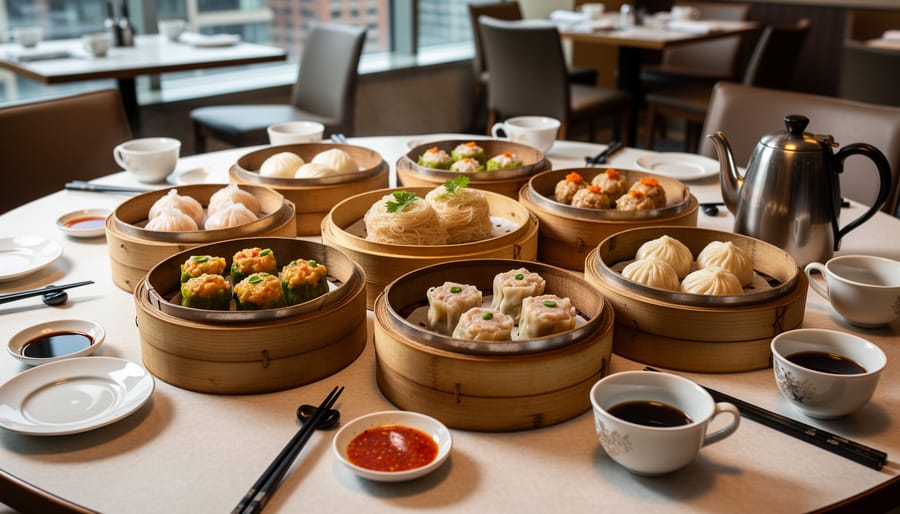
Every Sunday, Toronto’s Chinatowns transform into bustling dim sum destinations where families and friends gather around lazy Susans piled high with bamboo steamers. Downtown Spadina and Scarborough’s multiple Chinatown hubs buzz with lineups and the familiar clatter of teacups, making dim sum one of the city’s most cherished weekly traditions.
The variety is staggering. Har gow (delicate shrimp dumplings), siu mai (pork and shrimp parcels), char siu bao (sweet barbecue pork buns), and cheung fun (silky rice noodle rolls) are just the beginning. You’ll find chicken feet in black bean sauce, turnip cakes, egg tarts, and sticky rice wrapped in lotus leaves. Carts roll past tables laden with small plates, each dish designed for sharing and sampling.
What makes Toronto’s dim sum scene stand out is its accessibility and authenticity. Whether you’re at a sprawling banquet hall in Scarborough or a compact Spadina spot, you’ll find generations of Chinese families keeping this Cantonese tradition alive. Many restaurants now offer a la carte ordering alongside traditional cart service, and some adventurous places incorporate organic veggies for toppings in their modern takes.
Arrive early on weekends to beat the rush, bring a crowd to maximize your tasting range, and embrace the communal energy that makes dim sum a cornerstone of Toronto’s food identity.
9. Roti, Indo-Caribbean Soul Food
Roti is a cornerstone of Toronto’s food culture, brought to the city by waves of Trinidadian and Guyanese immigrants. This isn’t the thin Indian flatbread, Indo-Caribbean roti is a substantial meal: soft, flaky flatbread (usually dhalpuri or dosti) wrapped around generous portions of curried chicken, goat, shrimp, or chickpeas, often with potatoes and pumpkin mixed in. The flatbread itself is a marvel, layered with split peas in the case of dhalpuri, or made as a double wrap with dosti. Each bite delivers tender, slow-cooked curry with warm spices and the satisfying chew of hand-made bread.
Toronto’s Indo-Caribbean community, especially in Scarborough and Etobicoke, has turned roti into a citywide staple. Ali’s Roti Shop, Vena’s Roti, and Randy’s Roti are all essential stops where orders are rolled fresh, wrapped in foil, and handed over in portions that easily feed two (though you’ll probably finish it yourself). Lines at lunchtime speak to how deeply roti has woven itself into Toronto life, it’s affordable, filling, and packed with the kind of home-cooked flavor that turns first-timers into regulars. Whether you go traditional with curry chicken or branch out to goat or chickpea, roti is a must-try taste of Toronto’s Caribbean soul.
10. Banh Mi, Vietnamese Sandwich Perfection
The banh mi is a brilliant collision of French colonial history and Vietnamese ingenuity, and Toronto’s version honors that legacy while adding its own multicultural spin. At its core, you get a light, crusty baguette that shatters when you bite, far airier than a French loaf, stuffed with your choice of protein (grilled pork, pâté, lemongrass chicken, tofu), tangy pickled daikon and carrot, fresh cilantro, cucumber, and a swipe of mayo or chili sauce. It’s the perfect balance of savory, sweet, sour, and herby, all wrapped up in a portable package that costs less than a coffee.
Toronto’s Chinatown on Spadina Avenue is ground zero for exceptional banh mi, with longtime spots serving up sandwiches made to order in minutes. Venture into the suburbs, especially along Highway 7 in Richmond Hill or Warden Avenue in Scarborough, and you’ll find strip-mall gems where the baguettes are baked fresh daily and the fillings stay traditional. The Vietnamese community has deep roots here, and these shops reflect decades of recipe refinement. Whether you’re grabbing lunch between errands or fueling up after a late shift, banh mi delivers every time, no fuss, just flavor.
11. Souvlaki, Greek Street Food Done Right
Toronto’s Greek community has shaped the city’s food culture for generations, and nowhere is that more evident than along Danforth Avenue in Greektown. Souvlaki, marinated pork, chicken, or lamb grilled on skewers and tucked into warm pita with tzatziki, tomatoes, onions, and sometimes fries, is the neighbourhood’s signature dish. The char from the grill, the tang of the yogurt sauce, and the freshness of the toppings make every bite satisfying and memorable.
You’ll find souvlaki joints lining the Danforth between Pape and Broadview, many family-run for decades. The annual Taste of the Danforth festival transforms the street into an open-air celebration each August, where you can sample souvlaki alongside loukoumades, spanakopita, and other Greek classics while live music fills the air.
What sets Toronto’s souvlaki apart is the consistent quality and the authenticity preserved by second and third-generation restaurant owners who learned the recipes from their parents. Whether you grab a quick lunch or settle in for a full mezze spread, the combination of Toronto organic produce and traditional grilling techniques keeps locals and visitors coming back.
12. Nanaimo Bars, A Canadian Classic Dessert
Nanaimo bars might hail from British Columbia, but they’ve become a fixture in Toronto’s dessert lineup, showing up at every holiday party, bake sale, and café counter across the city. These no-bake treats pack three indulgent layers into one square: a crumbly chocolate-coconut-walnut base, a smooth custard-flavoured buttercream middle, and a thin shell of dark chocolate on top. The texture contrast, crunchy bottom, creamy center, snappy chocolate, makes them addictive, and their make-ahead nature makes them a favorite for hosts and bakers who want impressive results without turning on the oven.
You’ll find Nanaimo bars at bakeries in Leslieville, Kensington Market cafés, and church bazaars throughout the year, but they truly shine during the December holiday season when they appear alongside butter tarts and shortbread on every dessert tray. Some Toronto bakers riff on the classic with peanut butter centers or mint layers, but purists stick to the original custard formula. Though not Toronto-born, these bars have earned their place as one of the city’s go-to sweets, a Canadian classic that feels as local as fluffy quinoa grains feel trendy, beloved for their richness and their no-fuss appeal.
What Makes Toronto’s Food Scene So Unique?
Toronto’s food scene isn’t just diverse, it’s a living map of the world’s cuisines, shaped by successive waves of immigration that have transformed neighborhoods into culinary destinations. More than half of Toronto’s residents were born outside Canada, bringing family recipes, cooking traditions, and food businesses that have turned the city into one of the most multicultural dining capitals on the planet. Italian espresso bars in Little Italy, Portuguese grilled chicken on Dundas West, Polish pierogies in Roncesvalles, and Ethiopian injera platters in Little Ethiopia all sit within transit distance of each other.
What makes Toronto unique is how these foods have moved from niche community spots to mainstream staples. Jamaican patties appear in corner stores citywide, not just Caribbean neighborhoods. Vietnamese banh mi shops thrive in the suburbs. Greek souvlaki stands draw crowds year-round, and Middle Eastern shawarma has become late-night comfort food for everyone. The peameal sandwich and butter tart represent Ontario heritage, but they share space with dishes that arrived more recently and now feel just as essential to the city’s identity. Toronto’s food culture is collaborative and evolving, driven by small family businesses, market vendors, and street carts rather than corporate chains, which keeps it grounded in real communities and genuine flavors.
Frequently Asked Questions
What is Toronto’s most famous food?
The peameal bacon sandwich is Toronto’s most iconic dish, especially when eaten at St. Lawrence Market. However, the city is equally known for its multicultural staples like Caribbean patties, shawarma, and dim sum, which reflect Toronto’s diverse communities.
Where can I try peameal bacon in Toronto?
Carousel Bakery at St. Lawrence Market serves the city’s most legendary peameal bacon sandwich. You’ll also find excellent versions at neighbourhood delis and brunch spots across downtown and the east end.
Is poutine from Toronto?
No, poutine originated in Quebec in the 1950s. Toronto adopted and embraced this dish enthusiastically, adding creative twists like butter chicken and pulled pork versions that have become local favourites.
What neighbourhoods have the best street food?
Kensington Market offers Caribbean patties and global bites, while the Danforth features Greek souvlaki and the downtown core has hot dog carts on every corner. Scarborough is essential for authentic roti, patties, and shawarma from vibrant immigrant communities.
These questions come up constantly when people discover Toronto’s food reputation extends far beyond one signature dish. The answers point you toward real experiences rather than tourist traps, and they acknowledge that Toronto’s fame rests on both homegrown classics and the incredible variety brought by generations of newcomers who’ve made the city home.