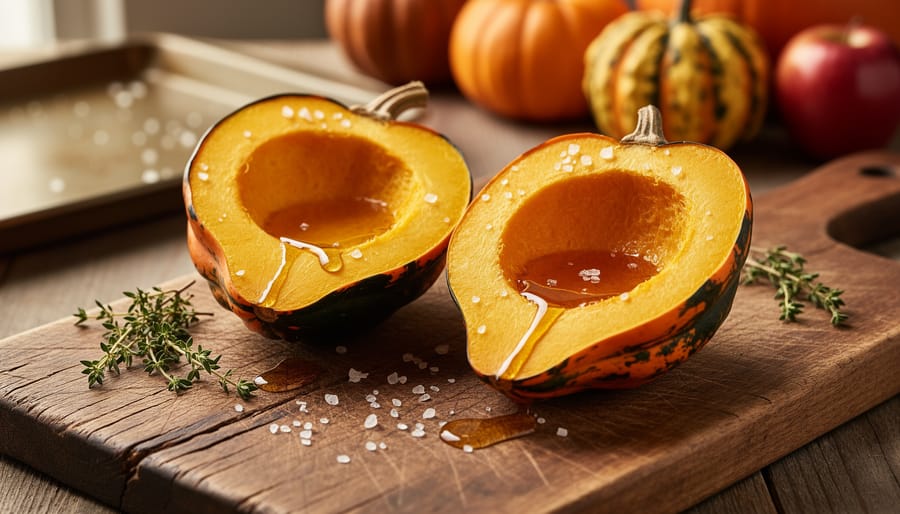
Cooking acorn squash in the oven is simple: preheat to 400°F, halve the squash vertically from stem to tip, brush with olive oil and maple syrup, then roast cut-side up for 50 to 60 minutes until fork-tender. The result is a perfectly caramelized, naturally sweet side dish that pairs beautifully with any fall or holiday meal, no fancy technique required.
This method works because the steady oven heat transforms the squash’s dense flesh into something tender and slightly sweet, while the cut sides develop those gorgeous golden-brown edges. If you’ve picked up a few acorn squash from Toronto organic produce markets this season, you already have the star ingredient for one of autumn’s easiest wins.
The beauty of roasted acorn squash is its versatility. Drizzle it with a bit more maple syrup and a sprinkle of fresh herbs like thyme or sage, and you’ve got a dish that feels special enough for Thanksgiving but laid-back enough for a Tuesday dinner. Whether you’re feeding a crowd or meal-prepping for the week, this straightforward oven method delivers consistent results every time. Let’s break down exactly what you’ll need and how to nail it.
Why Acorn Squash Belongs in Your Fall Kitchen
Acorn squash hits its peak in the fall, making it a perfect match for Toronto’s seasonal eating scene and the steady stream of organic produce showing up at farmers’ markets and specialty shops. This dark green, ridged squash offers a slightly sweet, nutty flavor that pairs beautifully with both savory herbs and sweeter additions like maple syrup. It’s packed with fiber, vitamin C, and potassium, which makes it a nutritious choice for health-conscious eaters looking to add more whole foods to their rotation.
What makes acorn squash especially appealing is its versatility. You can serve it as a comforting side dish for Thanksgiving dinner or toss it together on a Tuesday night when you need something satisfying without much fuss. Oven-roasting is hands-down the easiest preparation method because it requires minimal active work. You prep the squash, season it, and let the oven do the rest while you handle other tasks. The dry heat caramelizes the edges and concentrates the natural sweetness without any complicated techniques or special equipment.
For Toronto’s food enthusiasts who value organic eating and seasonal DIY projects, acorn squash checks all the boxes. It’s locally available throughout autumn, stores well for weeks, and fits seamlessly into both casual weeknight meals and more elaborate holiday spreads. The simplicity of roasting it means you spend less time wrestling with complicated recipes and more time enjoying a genuinely delicious fall side dish.
What You’ll Need to Roast Acorn Squash
Getting your prep organized makes roasting acorn squash stress-free. The ingredient list is refreshingly short, and most Toronto home cooks already have these items in their kitchens. You’ll want to gather everything before you start, especially since working with the squash’s hard exterior demands your full attention once you begin cutting.
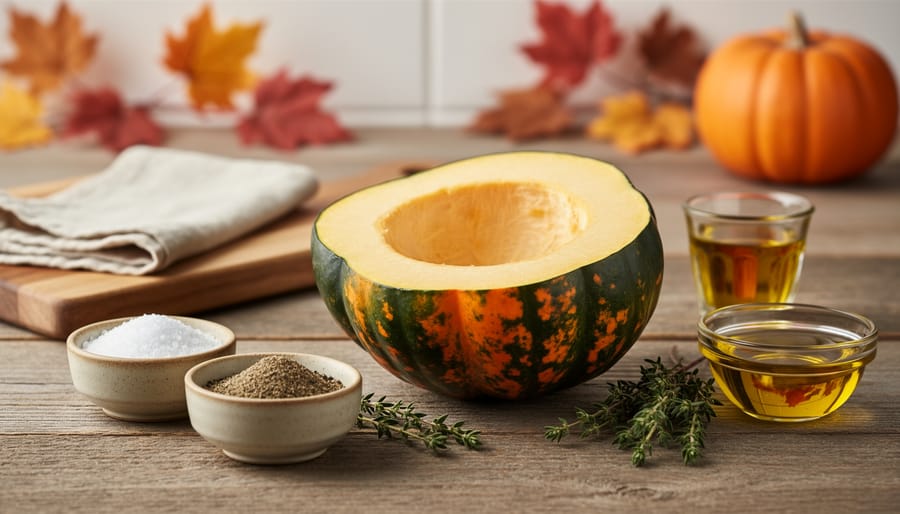
- 1 medium acorn squash (about 1.5 to 2 pounds)
- 2 tablespoons olive oil
- 2 tablespoons maple syrup
- Salt and freshly ground black pepper
- Optional: fresh herbs like thyme, rosemary, or sage
- Sharp chef’s knife or sturdy kitchen knife
- Cutting board with a damp towel underneath for stability
- Large spoon for scooping seeds
- Rimmed baking sheet
- Parchment paper or aluminum foil for easy cleanup
That’s genuinely it. The maple syrup adds a gentle sweetness that complements the squash’s natural nuttiness without overwhelming it, while olive oil ensures those edges caramelize beautifully at 400°F. If you’re aiming for organic ingredients, Toronto markets offer plenty of locally sourced options during fall, and Ontario maple syrup is easy to find year-round. The fresh herbs are entirely optional but worth considering if you’re serving this for a special meal.
Before You Begin: Safety and Squash Selection
Acorn squash has a thick, rock-hard shell that can be tricky to cut through safely. Before you start, make sure you’re working with a genuinely sharp chef’s knife, a dull blade requires more pressure and is more likely to slip off the tough skin. Never try to force your knife through the squash in one motion.
The key to safe cutting is stabilizing the squash so it won’t roll. Start by trimming a thin slice off one side to create a flat base, then rest the squash on that stable surface while you work. You can also place a damp kitchen towel under your cutting board to prevent any sliding. When you’re ready to halve the squash, position your knife at the stem end and press down firmly but steadily, rocking the blade slightly as you cut from stem to tip. Keep your free hand well away from the blade path.
Choosing the right squash makes the whole process easier. Look for one that feels heavy for its size, which indicates dense, moist flesh inside. The skin should be hard and matte with deep green coloring and prominent orange patches. Skip any squash with soft spots, cracks, or shiny, waxy skin, these are signs it’s either underripe or past its prime. A small, dry stem is fine, but avoid squash with wet or moldy stems. The firmer and heavier your acorn squash, the better it’ll roast and the sweeter it’ll taste once it comes out of the oven at 400°F.
Step-by-Step: How to Roast Acorn Squash in the Oven
Here’s how to roast acorn squash in your oven, from prep to perfectly tender results. The process is simple enough for a weeknight but impressive enough to serve at Thanksgiving.
Start by preheating your oven to 400°F. While it heats, prepare your squash.
- Cut the squash in half vertically, slicing from the stem end down to the pointed tip. Work slowly and keep one hand on top of the squash to stabilize it as you cut through the hard exterior.
- Scoop out the seeds and stringy pulp with a spoon. A serrated grapefruit spoon works especially well for this, but any sturdy spoon will do the job.
- Brush the cut surfaces and cavity of each half generously with olive oil, then drizzle with maple syrup. You want enough to coat the flesh without pooling in the center.
- Season with salt and pepper to taste. Don’t be shy with the salt; it balances the natural sweetness of the squash and syrup.
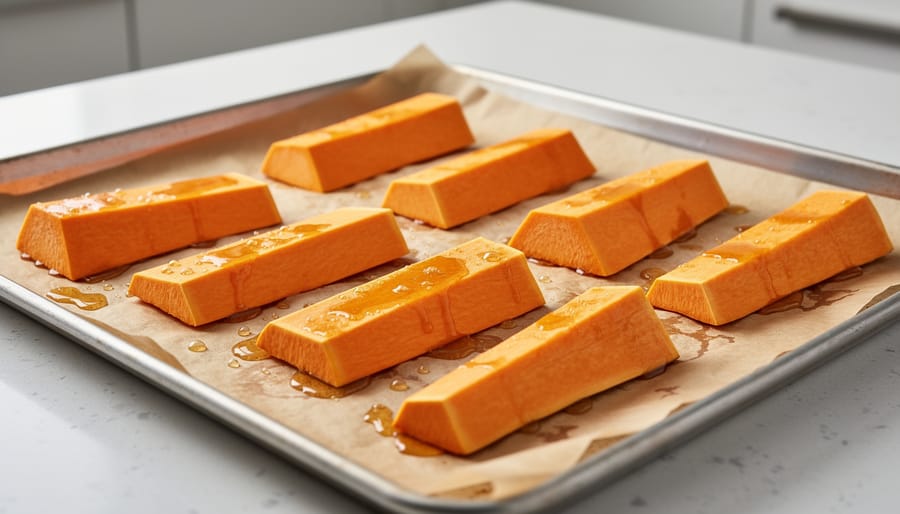
- Place the halves cut-side up on a baking sheet lined with parchment paper or foil. The lining makes cleanup easier and prevents sticking.
- Bake for 50 to 60 minutes, or until the flesh is tender when pierced with a fork or paring knife. The edges may caramelize slightly and turn golden brown.
The exact baking time depends on the size of your squash. Smaller halves may be ready closer to 50 minutes, while larger ones might need the full hour. Check for doneness around the 45-minute mark by inserting a fork into the thickest part of the flesh. If it slides in easily with no resistance, you’re done.
If you want deeper caramelization and richer flavor, you can flip the halves cut-side down for the last 10 minutes of baking. This creates more contact with the hot pan and intensifies the roasted notes, though it’s entirely optional.
Once out of the oven, let the squash rest for a few minutes before serving. The flesh will be steaming hot, and a brief cooling period makes it easier to handle and helps the flavors settle. A sprinkle of fresh herbs takes it over the top, transforming this simple preparation into something that feels special for fall gatherings or holiday meals.
How to Tell When It’s Done (and What to Do Next)
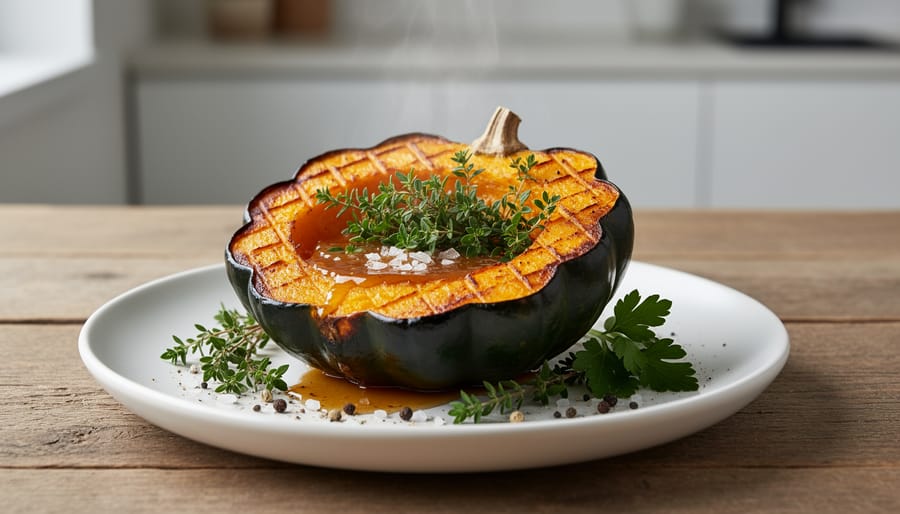
After 50 to 60 minutes in the oven, your acorn squash is ready when a fork or paring knife slides through the flesh with no resistance. The edges should look slightly caramelized and golden, and you might see the flesh pulling away from the skin just a bit. If there’s still firmness when you test it, give it another 5 to 10 minutes and check again.
Once it’s tender, you can serve it immediately or let it cool for a few minutes if you’re handling it for stuffing or slicing. A sprinkle of fresh herbs takes it over the top, and here are some ways to finish and serve your roasted squash:
- Garnish with chopped fresh thyme, rosemary, or sage for an earthy, aromatic touch
- Add a drizzle of balsamic glaze or extra maple syrup for sweetness
- Sprinkle toasted pecans or walnuts for crunch
- Pair with roasted turkey, easy fall side ideas like cauliflower pasta, or a simple grain salad
- Serve alongside Thanksgiving classics or weeknight proteins for a pop of color and flavor
Leftovers keep well in an airtight container in the fridge for up to four days. You can reheat them in the oven at 350°F for about 10 minutes, or just enjoy them cold in salads or grain bowls. If you cook quinoa or another hearty grain, roasted acorn squash makes a satisfying topping that adds sweetness and texture to the dish.
Creative Variations and Flavor Twists
Once you’ve mastered the basic maple-glazed version, acorn squash becomes a blank canvas for fall flavors. For a savory twist, skip the maple syrup and brush halves with olive oil mixed with minced garlic, fresh thyme, and rosemary before roasting. The herbs caramelize into the flesh and smell incredible. If you’re craving something sweet, swap the maple for brown sugar and add a generous sprinkle of cinnamon and nutmeg, it tastes like pie without the crust.
Stuffed acorn squash turns this side dish into a meal. After roasting for about 30 minutes, fill the cavity with cooked quinoa, sautéed kale, cranberries, and toasted pecans, then return it to the oven for another 20 minutes. The squash acts as an edible bowl that’s perfect for weeknight dinners or impressing guests at Thanksgiving.
For extra texture, toss chopped walnuts or almonds with a drizzle of honey and scatter them over the squash halfway through baking. Dried cranberries or chopped dates add pops of sweetness that pair beautifully with the squash’s natural earthiness. These small tweaks keep your fall cooking fresh without requiring fancy ingredients or complicated techniques.
Common Questions About Cooking Acorn Squash
Do I need to peel acorn squash before roasting?
No, the skin is completely edible and softens beautifully in the oven. It adds texture and holds the squash together, making it easier to serve.
Can I roast acorn squash cut-side down instead?
Absolutely. Roasting cut-side down caramelizes the flesh more deeply and prevents the edges from drying out, though you won’t get the same maple glaze effect on top.
What can I use if I don’t have maple syrup?
Honey, brown sugar, or agave syrup work well as substitutes. Even a drizzle of balsamic vinegar gives you that sweet-tangy contrast.
How long does roasted acorn squash keep?
Store leftovers in an airtight container in the fridge for up to four days. Reheat in a 350°F oven for about ten minutes to restore the texture.
You can definitely prep acorn squash ahead of time. Cut and season it in the morning, cover with plastic wrap, and refrigerate until you’re ready to roast. This makes it a lifesaver for holiday meals when oven space is at a premium. Just add a few extra minutes to the baking time if you’re starting from cold.
If your squash isn’t quite tender after the full hour, give it another ten minutes rather than cranking up the heat. Slow roasting at 400°F develops better flavor than rushing it at a higher temperature.
Roasting acorn squash in the oven is one of those effortless fall victories that pays off every time. Whether you’re prepping a weeknight side or setting the table for Thanksgiving, this dish brings warmth, color, and that unmistakable seasonal sweetness to your plate. Toronto’s organic eating community thrives on recipes like this, simple, ingredient-driven, and tied to the rhythm of the harvest. Once you’ve nailed the technique, don’t hesitate to turn it into a recipe you share with friends or adapt with your own flavor twists. Grab a squash at your local market, fire up the oven, and enjoy the kind of fall cooking that never goes out of style.