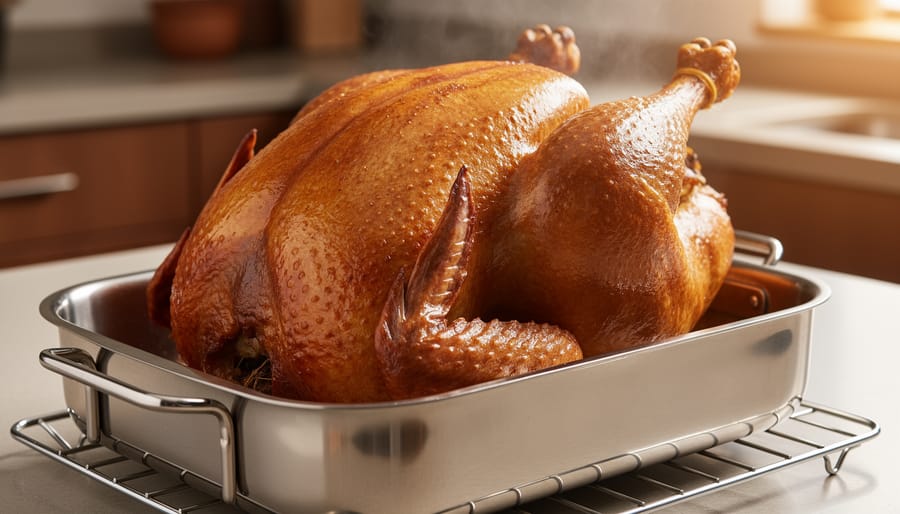
Planning Thanksgiving dinner and need to know exactly when to get that bird in the oven? An unstuffed turkey roasted at 350°F takes roughly 13 minutes per pound, meaning a 14-pound bird will be golden and ready in about three and a half hours. The key difference from a stuffed turkey is simple: without stuffing in the cavity, heat circulates faster and more evenly, cutting your total cooking time by 30 to 45 minutes and reducing the risk of undercooked meat near the center.
Whether you’re hosting your first holiday dinner in your Toronto apartment or you’re a seasoned cook looking to nail the timing this year, getting your turkey done right comes down to three things: knowing your bird’s weight, tracking internal temperature (aim for 170°F in the thigh), and giving yourself a buffer for resting time before carving. The timing chart below breaks down exact roasting windows for every size from eight pounds to 24, so you can plan your day around perfectly moist, safely cooked turkey instead of anxiously checking the oven every twenty minutes. No guesswork, no panic, just a straightforward roadmap from raw to table-ready.
What You’ll Need to Roast an Unstuffed Turkey
Before you can nail the timing, you need the right setup. Roasting a turkey isn’t complicated, but skipping essential tools turns a straightforward process into guesswork. Here’s what you actually need:
- Meat thermometer: The single most important tool for food safety, letting you verify that internal temperature hits 170°F without cutting into the bird.
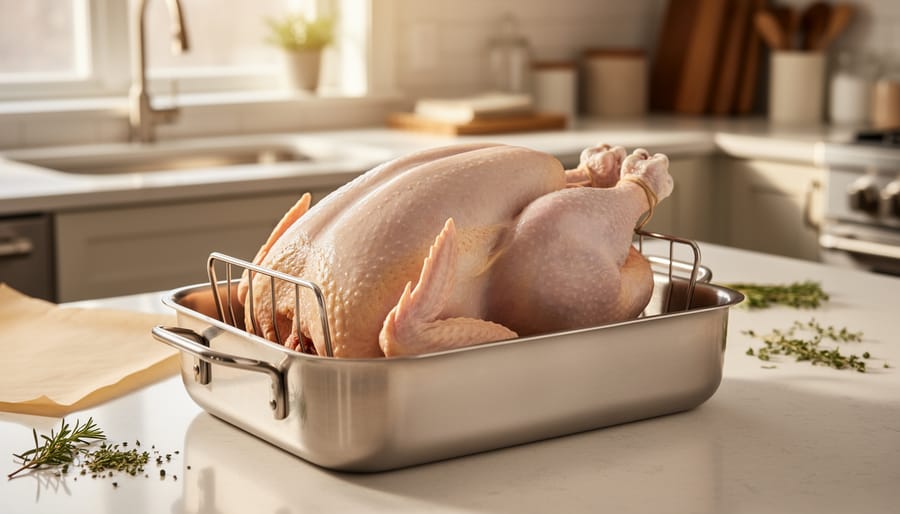
- Roasting pan with a rack: Elevates the turkey so heat circulates evenly underneath and prevents the bottom from steaming in its own drippings.
- Heavy-duty aluminum foil: Covers the breast if it’s browning too fast while the thighs catch up, preventing dry white meat.
- Basting brush or bulb baster: Optional for keeping the skin moist and golden, though not strictly necessary for doneness.
- Kitchen twine: Holds the legs together for even cooking and a neater presentation.
- Large cutting board: You’ll need somewhere stable to let the turkey rest for 20-30 minutes after roasting.
The thermometer deserves special emphasis. Many Toronto cooks rely on timing alone, then panic when they’re not sure if the bird is safe to serve. A simple instant-read or probe thermometer removes all doubt. You’re looking for 170°F in the thickest part of the thigh, and nothing else matters as much as hitting that number. Skip the fancy gadgets if your budget is tight, but don’t skip the thermometer.
Your roasting pan should be sturdy enough to handle a heavy bird without warping at 350°F. If you’re working with a compact condo oven, measure your pan before shopping for your turkey. There’s nothing worse than discovering your 20-pounder won’t actually fit.
Complete Unstuffed Turkey Cooking Time Chart
Here’s your quick-reference guide to unstuffed turkey cooking times at 350°F. Print this out, snap a photo, or bookmark it before you head to the grocery store.
Turkey Weight and Cooking Time at 350°F:
8-10 pounds: 2 to 2.5 hours
11-13 pounds: 2 hours 45 minutes to 3 hours 15 minutes
14-16 pounds: 3.5 to 4 hours
17-19 pounds: 4 hours 15 minutes to 4 hours 45 minutes
20-22 pounds: 5 to 5.5 hours
23-24 pounds: 5 hours 45 minutes to 6 hours
These times assume your turkey starts at refrigerator temperature, goes straight into a preheated 350°F oven, and sits uncovered or loosely tented on a rack. They’re your planning baseline, not your finish line.
The range exists because every bird is slightly different. A wider turkey cooks faster than a tall, narrow one of the same weight. Your oven’s actual temperature might run hot or cool. The turkey’s starting temp matters too, if it sat on the counter for an hour while you prepped sides, it’ll cook faster than one straight from the fridge.
Use these times to plan your day and set your timer for the minimum time listed. When that alarm goes off, grab your meat thermometer. You’re aiming for 170°F in the thickest part of the thigh, not the clock. A 14-pound bird might hit that mark at 3 hours 20 minutes or stretch to the full 4 hours depending on the variables above. Plan backwards from your dinner time, adding 30 minutes of resting time after roasting, and you’ll land your turkey perfectly without the last-minute panic that plagues so many Toronto kitchens each holiday season.
Food Safety First: Temperature and Timing Warnings
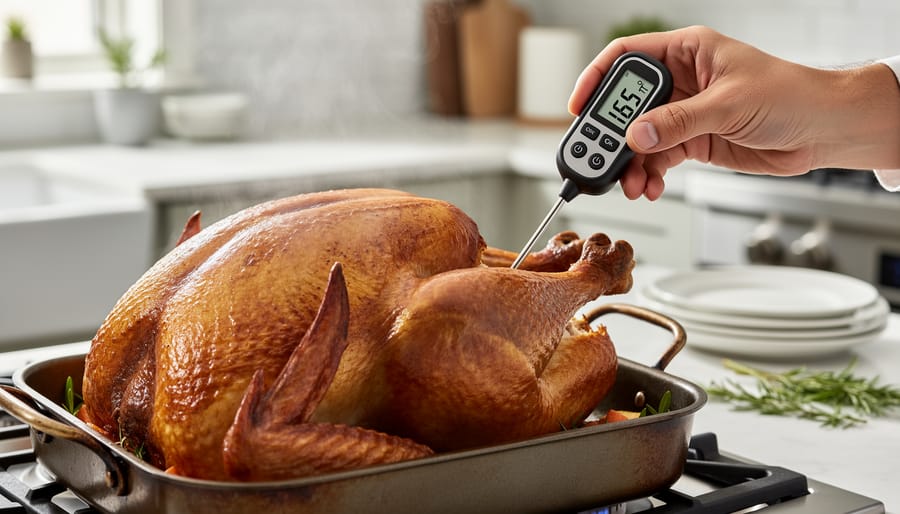
Here’s the thing about roasting a turkey: the chart gives you a roadmap, but your thermometer tells you when you’ve actually arrived. The safe internal temperature for an unstuffed turkey is 170°F, measured at the thickest part of the thigh without touching bone. That number isn’t negotiable, and it’s not a suggestion from some overcautious food scientist. It’s the threshold where harmful bacteria like Salmonella are destroyed.
Between 40°F and 140°F lies what food safety experts call the danger zone, where bacteria multiply rapidly. Your turkey spends hours climbing through this range as it roasts, which is exactly why you can’t eyeball doneness or rely solely on timing. A 14-pound bird might finish in three and a half hours or take the full four, depending on your oven’s quirks, how cold the turkey was when it went in, and whether you’re wrestling with a temperamental condo oven that runs hot or cold.
The most common mistake? Pulling the bird when the timer goes off instead of when the thermometer confirms it’s done. Timing helps you calculate cooking time and plan your day, but temperature is the law. Check early, check often, and never skip that final verification before you carve.
Step-by-Step: How to Roast Your Unstuffed Turkey
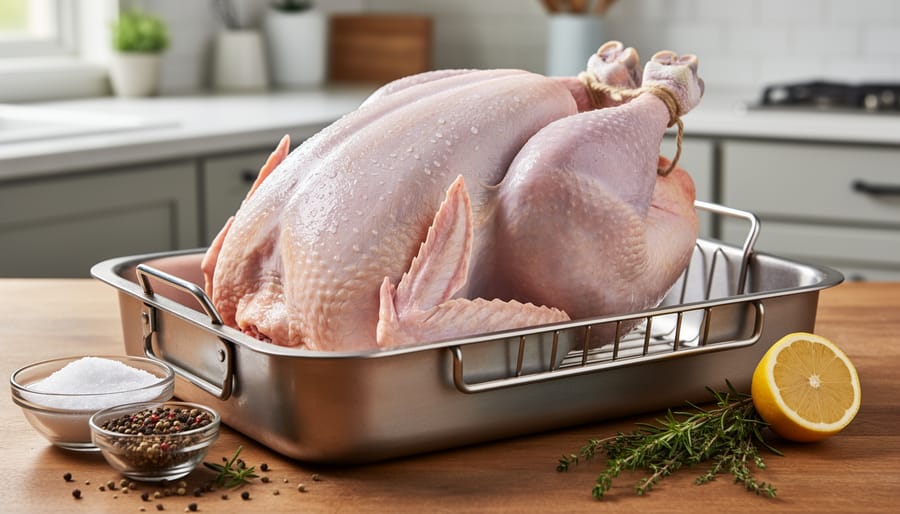
Start by pulling your turkey out of the fridge about an hour before you plan to roast it. A bird that’s closer to room temperature cooks more evenly than one that’s ice-cold in the center. While it’s sitting on your counter, crank your oven to 350°F and let it fully preheat. Most Toronto condos have compact ovens that can run hot or cool, so give yourself a solid 20 minutes for an accurate preheat. No shortcuts here.
Pat the turkey completely dry with paper towels, inside and out. Moisture on the skin means steam instead of crisp golden brown, and nobody wants a soggy bird. Season generously with salt and pepper, or whatever rub makes you happy. If you’re feeling ambitious, tuck some butter under the skin of the breasts for extra richness.
- Position the turkey breast-side up on a roasting rack set inside your pan. The rack keeps the bottom from steaming in its own drippings and helps air circulate for even cooking. If you don’t have a rack, crumple foil into loose coils to improvise a lift.
- Decide on your foil strategy now. You can tent the breast loosely with foil for the first half of roasting to prevent over-browning, then remove it to let the skin crisp up. Or roast uncovered the whole time if you’re confident in your oven’s evenness and don’t mind a darker finish.
- Slide the pan into the center of your preheated 350°F oven and set a timer for about two-thirds of the estimated cooking time based on your turkey’s weight. This is your check-in point, not your finish line.
- When the timer goes off, start monitoring. Insert your meat thermometer into the thickest part of the thigh without touching bone. You’re aiming for 170°F, but don’t panic if you’re not there yet. Keep checking every 20 minutes as you approach the target.
- Once the thermometer hits 170°F in the thigh, pull the turkey out immediately. Transfer it to a cutting board or serving platter and tent it loosely with foil.
- Let it rest for at least 30 minutes before carving. This isn’t optional. Resting lets the juices redistribute throughout the meat instead of flooding your cutting board the second you slice in.
If you’re working with a smaller condo oven and a larger bird, you might need to rotate the pan halfway through for even browning. Just work quickly so you don’t drop the oven temperature too much. And if your turkey’s getting too dark before it’s done, tent it with foil for the remaining time.
The resting period is when you can get your gravy finished, reheat sides, and set the table without rushing. Your turkey will stay plenty hot, and the payoff in juiciness is worth every minute of waiting.
How to Know When Your Turkey Is Actually Done
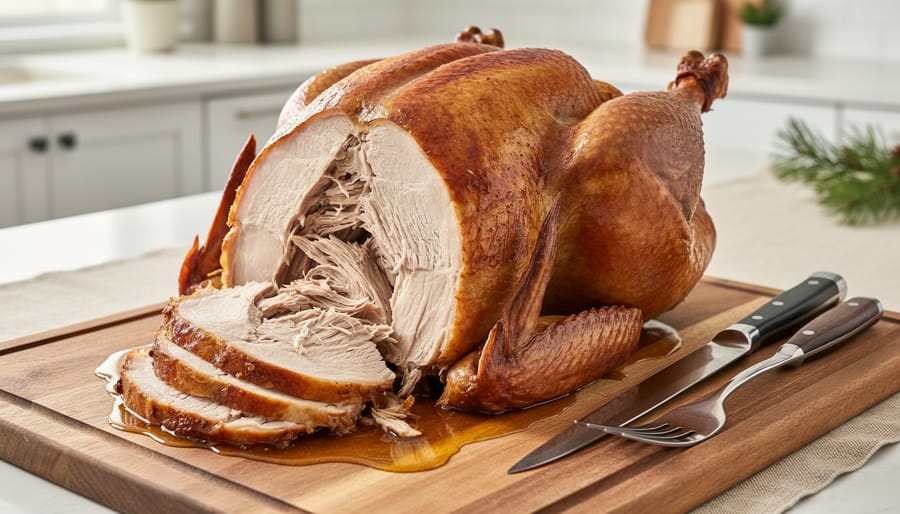
The timer’s going off, you’ve checked the chart, but here’s the truth: the clock is a guide, not a guarantee. Temperature is the only reliable way to know your turkey is safely cooked through.
Grab your meat thermometer and insert it into the thickest part of the thigh, angling toward the body but making sure you don’t hit bone (which throws off the reading). You’re looking for 170°F. If you’ve got a digital instant-read, you’ll see the number climb and settle within seconds. Old-school dial thermometers take longer but work just as well once they stop moving. Don’t just check one spot. Test both thighs and the thickest part of the breast to be sure.
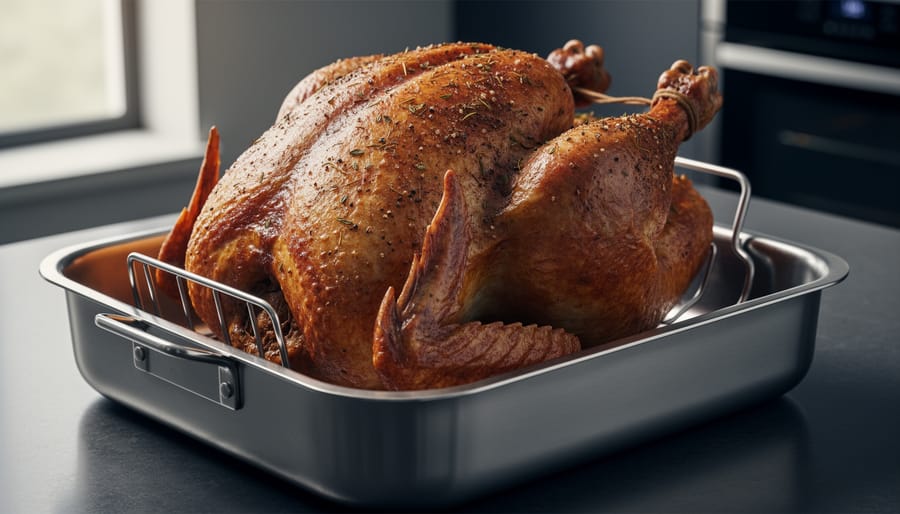
Beyond the numbers, look for visual cues. Pierce the skin where the thigh meets the body and check the juices. They should run clear or pale gold, never pink or red. The drumstick should move easily when you give it a gentle wiggle, almost loose in the joint.
If you’re at 165°F but not quite 170°F, don’t panic. Tent loosely with foil and give it another 15 to 20 minutes, then check again. Just like timing your oven-roasted squash doneness beats the clock every time. Trust the thermometer, trust your eyes, and you’ll nail it.
Your Unstuffed Turkey Questions Answered
Does unstuffed turkey really cook faster than stuffed?
Yes, significantly faster. An unstuffed turkey roasts about 30 to 45 minutes less than a stuffed bird of the same weight because heat can circulate freely through the cavity. Our timing chart assumes an unstuffed turkey at 350°F, so if you decide to stuff yours, add at least half an hour and check that the stuffing center reaches 165°F.
Can I roast at a different temperature?
You can, but your timing will shift. Higher heat like 375°F or 400°F speeds things up but risks drying out the breast before the thighs finish. Lower temps around 325°F add time but can yield moister meat. Stick with 350°F if you want the chart times to hold true, and always rely on your thermometer reading 170°F rather than the clock.
Why does my turkey always dry out?
Overcooking is the usual culprit. Many home cooks leave the bird in too long, trusting the maximum time instead of pulling it at 170°F. The breast meat continues cooking during the resting period, so yanking it right at temp prevents that sad, chalky texture. Tenting with foil partway through also helps retain moisture.
How long should my turkey rest before carving?
Rest it for at least 20 to 30 minutes under loose foil. This lets the juices redistribute instead of running all over your cutting board, and the internal temp will actually climb a few degrees while it sits.
Where can Toronto cooks find good local birds?
Check out farmers’ markets like St. Lawrence or visit Toronto organic produce shops that stock heritage-breed turkeys from Ontario farms. Many butchers in Kensington Market and Leslieville carry fresh, locally raised options during the holiday season.
What if my turkey is almost done but not quite at 170°F?
Give it another 15 to 20 minutes and check again. If the skin is browning too fast, tent it with foil to prevent burning while the interior finishes cooking.
Once you nail your timing and temp, you’ll have a centerpiece worth celebrating, and plenty of leftovers to work into those classic Toronto dishes to try all week long.