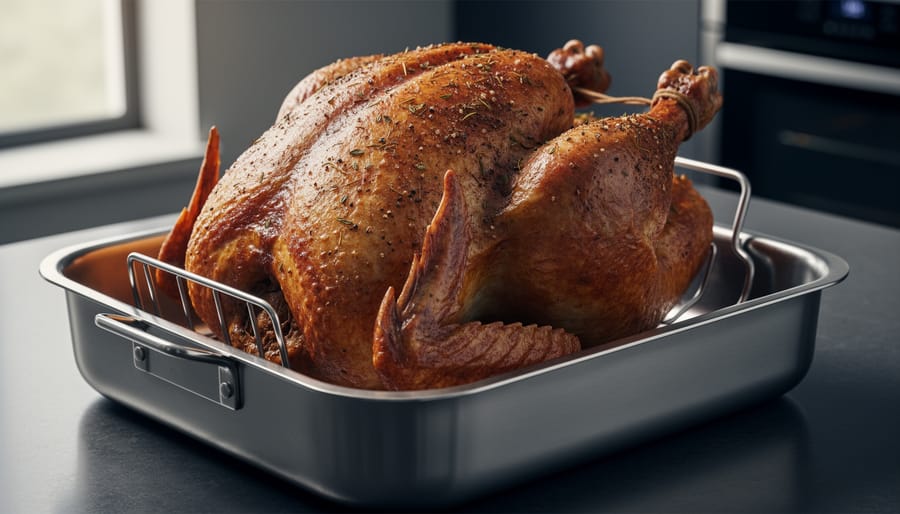
Roasting a whole turkey comes down to two numbers: cook it at 325°F until the thickest part of the breast and thigh hits 165°F. That’s the safe internal temperature you’re aiming for, and while many cooks pull their bird at 160°F and let carryover cooking finish the job during a 15 to 30 minute rest, you need that final temp of 165°F before anyone eats. The roasting time varies by weight (roughly 13 to 15 minutes per pound for an unstuffed bird), which means a 12-pounder will take around three hours, not the all-day affair some people fear.
Getting this right matters, especially when you’re feeding a crowd for Thanksgiving or any big holiday meal. An undercooked turkey is unsafe, but an overcooked one turns dry and disappointing. The good news? Once you understand the basics of oven temperature, internal temp targets, and timing guidelines, you’ll gain the confidence to roast a turkey that’s juicy, golden, and safe. Whether you’re tackling your first bird in a Toronto apartment kitchen or you’re a seasoned cook refining your technique, this guide walks you through everything: the tools you need, the safety steps you can’t skip, the exact process from prep to carving, and how to troubleshoot common problems. By the end, you’ll know exactly how long your turkey needs and when it’s truly done.
What You Need Before You Start
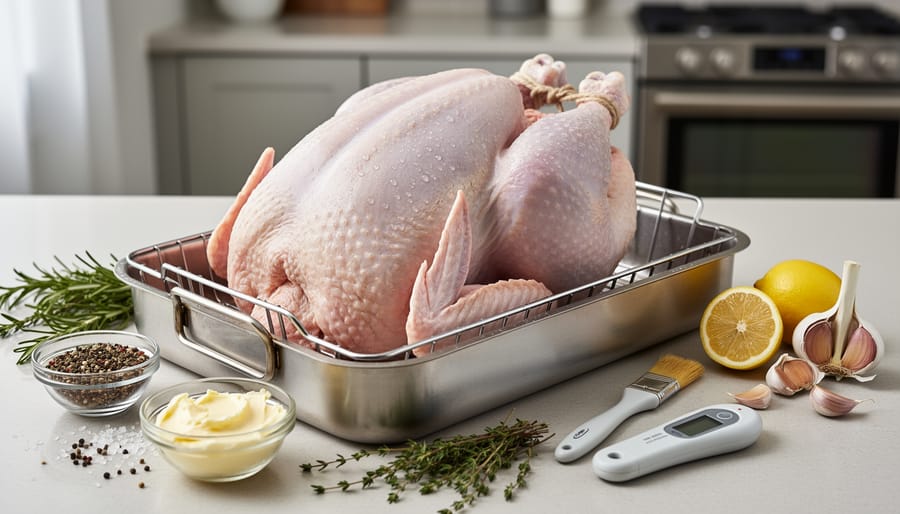
You don’t need a kitchen full of gadgets to roast a turkey perfectly, but a few key tools will save you stress and guesswork. Here’s what matters:
- A reliable meat thermometer, instant-read or leave-in probe style both work
- A roasting pan with a rack to lift the bird and promote even cooking
- Aluminum foil for tenting if the skin browns too quickly
- An oven thermometer to verify your oven actually hits 325°F
- A kitchen timer so you don’t lose track during the chaos
Let’s talk about the thermometer first, because it’s the only tool that’s truly non-negotiable. You cannot reliably judge doneness by poking the turkey, watching the juices, or timing alone. Ovens vary, birds vary, and that “clear juice” trick your aunt swears by? Not foolproof. A good thermometer tells you exactly when your turkey hits 165°F, the safe internal temperature, so you can stop second-guessing and start carving.
Instant-read thermometers are fast and affordable; you insert them, wait a few seconds, and get your reading. Leave-in probe thermometers stay in the bird while it roasts and alert you when it’s done, which is handy if you’re juggling side dishes. Either works. Just make sure it reads accurately and you know how to use it.
The roasting pan with a rack keeps the turkey elevated so heat circulates underneath, giving you even cooking and crispy skin all around. Foil is your backup plan if the breast starts browning too fast, tent it loosely and keep roasting. And if your oven runs hot or cold (many do), an oven thermometer confirms you’re actually at 325°F, not guessing.
The Temperature Rules You Need to Know
Three numbers will make or break your turkey: 165°F, 325°F, and 160°F. Master these, and you’ll never second-guess whether your bird is safe, juicy, or somehow both.
Start with 165°F, the magic number for doneness. That’s the internal temperature your turkey must reach in the thickest part of the thigh and breast to kill harmful bacteria like salmonella. This isn’t negotiable. The USDA sets this standard because it guarantees safety, and no amount of golden-brown skin or clear juices can replace an actual temperature reading. When your thermometer hits 165°F, your turkey is safe to eat, period.
Your oven should stay at 325°F throughout roasting. This moderate heat cooks the bird evenly without scorching the outside before the inside catches up. Higher temps might promise speed, but they often deliver dry breast meat and unevenly cooked thighs. Lower temps extend cooking time and increase the risk of bacterial growth in the danger zone. Stick with 325°F, it’s the sweet spot that balances time, texture, and safety.
Now for the advanced move: pulling your turkey at 160°F. If you remove the bird when it hits 160°F and let it rest for 15 to 30 minutes under foil, carryover heat will push the internal temp up to 165°F while the juices redistribute. This technique keeps breast meat from drying out, but it only works if you actually rest the turkey. If you’re new to this, there’s zero shame in roasting all the way to 165°F in the oven. You’ll still get a delicious bird, and you won’t spend the rest wondering if you miscalculated.
Step-by-Step: How to Cook Your Turkey
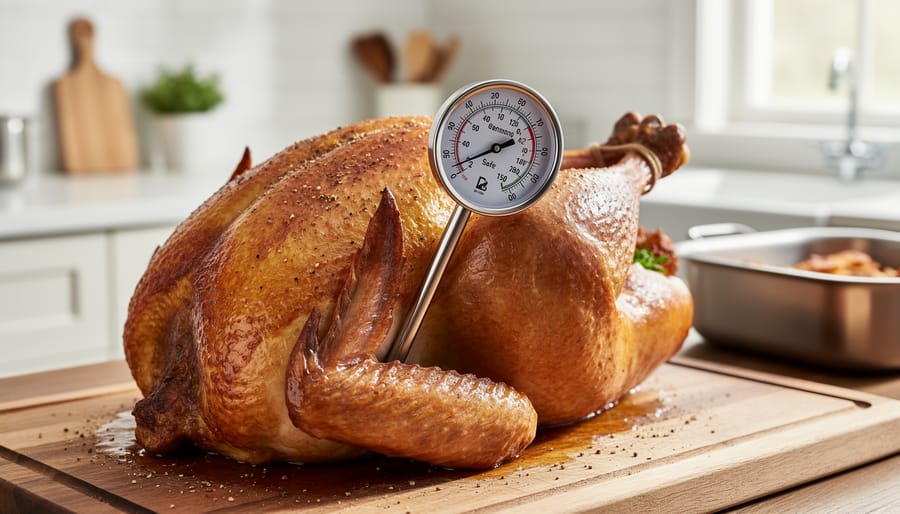
Roasting a turkey isn’t rocket science, but following the right sequence makes the difference between a stress-free holiday and a dry, overcooked disaster. Here’s how to cook turkey the right way, step by step.
- Preheat your oven to 325°F. Don’t skip this step or start with a cold oven, consistent heat is what delivers even cooking and safe results.
- Prepare the turkey: make sure it’s fully thawed (no ice crystals anywhere), let it sit at room temperature for 30 minutes to take the chill off, then pat it dry inside and out with paper towels. Season however you like, butter, herbs, salt, pepper, but keep it simple if you’re new to this.
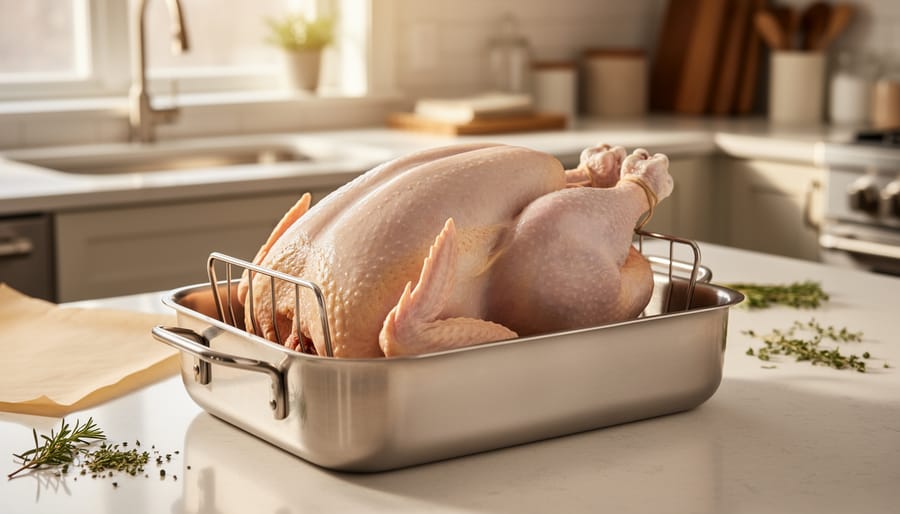
- Place the turkey breast-side up on a rack in your roasting pan. The rack lifts the bird so heat circulates underneath, which helps everything cook evenly. No rack? Ball up some aluminum foil and use that as a makeshift stand.
- Insert your meat thermometer into the thickest part of the thigh, angling it toward the body without touching bone. Bone conducts heat differently than meat, so if your probe hits it, you’ll get a false reading that’s either too high or too low.
- Roast uncovered. No foil tent at the start, you want that skin to brown. Baste if you want to (it adds flavor, though it won’t keep the meat moist), but don’t open the oven door constantly. Every time you do, the temperature drops and your cooking time stretches.
- Start checking the temperature in the final hour of your estimated roasting time. Check multiple spots: both thighs and the thickest part of the breast. Turkey doesn’t cook uniformly, so one thigh might hit 165°F while the other is still at 155°F. The whole bird needs to reach that safe minimum before you pull it out.
- Remove the turkey when it hits 165°F in all the spots you check. If you’re comfortable with carryover cooking, you can pull it at 160°F and let it rest, the internal temp will climb another 5 degrees or so. But if you’re new to this, waiting for 165°F in the oven is the safer, simpler call.
Once it’s out, tent the turkey loosely with foil and let it rest for at least 15 minutes before carving. This lets the juices redistribute so they don’t all run out onto the cutting board. Your turkey will stay hot, don’t worry about it cooling down too much.
The key here is trusting your thermometer over the clock. Ovens vary, turkeys vary, and timing charts are just estimates. Temperature is the only measurement that tells you the truth about doneness.
Timing Guidelines by Turkey Size
Here’s a rough roadmap to keep you on track, but remember: these are estimates, not ironclad promises. Your thermometer gets the final word.
For a 10-12 pound bird, you’re looking at roughly 2.5 to 3 hours at 325°F. A 12-16 pounder typically takes around 3 to 4 hours, while an 18-20 pound turkey usually needs 4 to 4.5 hours. If you’re cooking a 20-24 pound giant, plan for 4.5 to 5 hours. These numbers assume an unstuffed turkey time calculation, stuffing adds about 30 minutes to the total.
These ranges give you a ballpark for planning your day, but don’t set a timer and walk away. Ovens vary wildly in accuracy (some run hot, others cool), and starting temperature matters. A fridge-cold turkey takes longer than one that sat at room temp for 30 minutes. Stuffing slows things down because the center takes longer to heat through.
Think of the cook time per pound as a helpful starting point, not a finish line. Start checking the internal temperature about an hour before the low end of the estimate. Insert your thermometer into the thickest part of the thigh, then check the breast. When both spots hit 165°F, you’re done, whether that happens 30 minutes early or 20 minutes late.
The clock helps you plan dinner. The thermometer tells you when to eat.
Resting and Carryover Cooking Explained
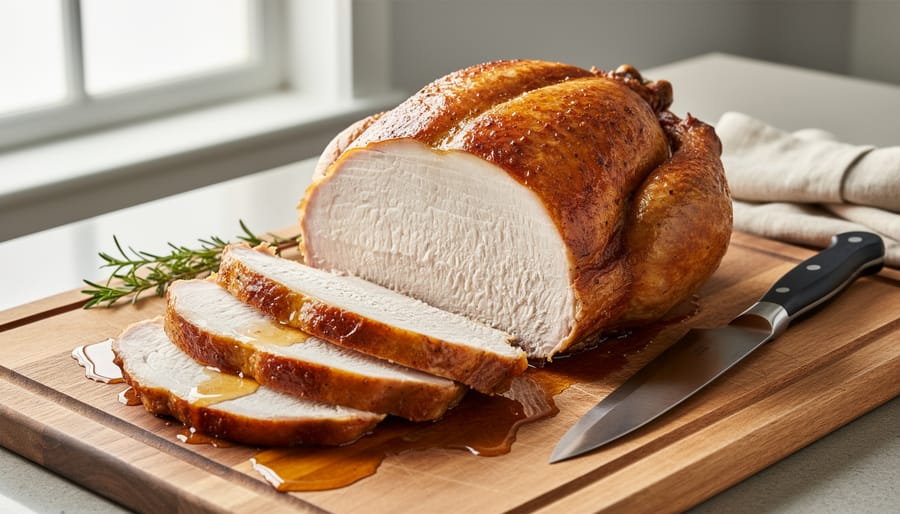
When you pull turkey from the oven, it doesn’t stop cooking. Carryover heat continues raising the internal temperature by 5 to 10 degrees as the bird rests, which means you can pull it a bit early and still hit that safe 165°F target. This resting period also lets juices redistribute throughout the meat instead of spilling onto the cutting board, giving you moister, more flavorful slices.
Here’s how it works: once your thermometer reads between 155 and 160 degrees, remove the turkey from the oven and tent it loosely with aluminum foil. Let it sit on the counter for 15 to 30 minutes, depending on the bird’s size. During this time, carryover cooking finishes the job while the muscle fibers relax and reabsorb moisture. When you carve, you’ll notice the difference.
If this feels risky or complicated, there’s zero shame in waiting until your thermometer hits 165 degrees in the oven before pulling the bird. You’ll still get excellent results, especially if you rest it for 15 minutes. The carryover technique is a refinement, not a requirement. Either way, skipping the rest entirely is the real mistake, cutting into turkey immediately guarantees dry meat and a puddle of wasted juices.
How to Tell When Your Turkey Is Really Done
Your thermometer reads 165°F, but you’re still second-guessing yourself, totally normal. Here’s how to confirm your turkey is truly done and safe to serve.
Check the temperature in multiple spots, not just one. Insert your thermometer into the thickest part of both thighs and the deepest part of the breast, making sure you don’t hit bone (which gives falsely low readings). All three spots should register at least 165°F. The thighs typically take longest, so if they’re done, the rest usually is too.
Look for clear juices running from the thigh when you pierce it. If the liquid is pink or bloody, keep cooking. Golden-brown, crispy skin across the bird is a good visual cue, though it’s not a safety guarantee on its own.
What if one part hits 165°F but another doesn’t? Tent the cooked areas loosely with foil to slow browning, then return the turkey to the oven and keep checking every 15 minutes until all parts reach temp. This happens sometimes with larger birds or uneven oven heat, it’s fixable, not a failure.
Bottom line: internal temperature is your only reliable test. Trust the thermometer, check multiple spots, and you’ll carve into perfectly cooked turkey every time.
Common Mistakes and How to Avoid Them
We’ve all been there, anxiously peeking in the oven, second-guessing our timing, wondering if the turkey will be dry or worse, dangerously undercooked. The good news? Most turkey disasters are completely preventable. Here are the mistakes that trip up even experienced Toronto cooks, and how to dodge them:
- Starting with a partially frozen bird, the outside overcooks while the inside stays raw and never reaches 165°F safely
- Winging it without a thermometer, your aunt’s “when the juices run clear” method isn’t reliable, and guessing puts your guests at risk
- Opening the oven door every 20 minutes to check progress, each peek drops the temperature and extends cooking time unpredictably
- Jamming the thermometer into the bone, you’ll get a falsely low reading and pull the turkey too early
- Carving immediately after pulling from the oven, skipping the 15-30 minute rest means all those precious juices run onto the cutting board instead of staying in the meat
The biggest mistake of all? Trusting the clock more than the thermometer. Your oven might run hot or cold, your turkey might have been colder than you thought, or airflow in a crowded holiday oven might affect cooking. Time gives you a ballpark estimate, but only hitting 165°F in the thickest part of the thigh (without touching bone) tells you it’s truly done. Check multiple spots, trust your thermometer, and you’ll avoid that sinking feeling when you slice into undercooked, or bone-dry, poultry. Temperature is always the boss.
Frequently Asked Questions
You have questions, and we have answers. Here are the most common concerns Toronto home cooks raise about stress-free turkey roasting answered clearly and practically.
Can I cook turkey at a different temperature?
You can, but 325°F is the sweet spot for even cooking and food safety. Higher temperatures risk burning the outside before the inside reaches 165°F, while lower temperatures extend cooking time significantly and can leave you in the danger zone for bacteria growth.
How long should I let my turkey rest?
Rest your turkey for 15 to 30 minutes after removing it from the oven. This allows juices to redistribute and lets carryover cooking bring the internal temperature up by 5 to 10 degrees.
What if I don’t have a meat thermometer?
Honestly, you need one. Visual cues like clear juices and golden skin help, but they are not reliable indicators of doneness. A basic instant-read thermometer costs around ten dollars and is the only way to know your turkey is safely cooked to 165°F.
Is 160°F safe if I let it rest?
Yes, if you are comfortable with the technique. Many experienced cooks pull turkey at 160°F, knowing carryover heat will push it to 165°F during rest. If you are new to roasting turkey, wait until it hits 165°F in the oven for guaranteed safety.
Why does your turkey cook faster or slower than the chart says? Oven calibration, whether the bird is stuffed, starting temperature, and even pan type all affect timing. That is why the thermometer is your true finish line, not the clock. Charts give you a ballpark, but temperature tells you when dinner is ready.
You’ve got this. Armed with a reliable meat thermometer, a 325°F oven, and the magic number of 165°F internal temperature, you’re ready to roast turkey with confidence instead of crossed fingers. The timing charts are helpful guides, but your thermometer always has the final word, trust it, and you’ll never serve a dry or undercooked bird again.
Whether you’re hosting a traditional Thanksgiving spread, a multicultural holiday feast, or just a Sunday dinner with friends in your Toronto kitchen, the process is the same. Check the temperature in multiple spots, let the bird rest while you catch your breath, and then gather everyone around the table. The beauty of cooking turkey isn’t perfection, it’s the ritual, the shared meal, and the satisfaction of pulling off something that felt intimidating at first. You’ve learned the fundamentals, and now it’s time to put them to work. Your guests are going to love it, and you’ll actually enjoy the cooking part too.